I never usually write personal tributes
to musicians who have passed.
However, this weekend, I lost the first
of my real heroes – the man who is responsible for me playing the
bass in the way that I do; one of the three men who created the first
real 'super group', and bonded me to one of my best friends more than
any other band.
Of course, I am talking about Jack
Bruce, the greatest bass player in popular music history.
Jack Bruce, live at the Holmfirth Picturedrome, March 30th 2012
Anybody who knows me will know that
under this cynical exterior lies the heart of a sentimental old fool.
Therefore, it will come as no surprise to many that I was not ashamed
to shed a few tears when news of Jacks' passing was reported on BBC
News, last night, and they showed a clip of Cream's farewell concert
at the Royal Albert Hall from 1968.
Predominantly being a fan of music that
was recorded usually at least 10 years before I was born, I have
always known that I would be there to 'see' the great heroes of mine
pass. But I was so
unprepared for this one, and for the first passing
to be one of the most influential people in music to me, is why I am
writing this. I think Mr Bruce deserves a small tribute for all his
inspiration.
The three piece that was my last band,
was
modelled on Cream. The guitarist in this band, and lifelong
friend I made as a result of the 60's power trio, modelled his
playing on Eric Clapton, and my playing was modelled on Jack Bruce.
If I do say so myself, we weren't bad imitations.
But nothing could ever really emulate
the real thing.
When I heard of his passing, I
immediately text my friend the news. I knew he would not have heard,
because if he had, there would have been a text in my inbox quicker
than you could say Spoonful. Sending that text was what I imagine it
must be like for parents when they have to tell their children they
are getting divorced. Inevitably, we ended up having a little
reminisce about his greatness and the impact he had on both of us. Do
I need to elaborate further on my compulsion to write a tribute?
Bruce is unique in the world of bass
playing, because he was one of the very first revolutionaries. With
his Gibson EB-3 model, it became more than just a bass. For the first
time, it was a bass guitar. Whether on Cream albums, or on his much
overlooked, sterling solo albums, Jack's playing was always so
exciting to listen to. Until he came along, the entire function of a
bass was just to pin down the basics.
Jack was more than able to do that.
What made him unique for his time, was that he also had an amazing
improvisational talent, which enabled him to create serious grooves,
hooks and solos, but still be able to pin it down, every beat. Any
time I pick up one of my basses, which is regularly, I always find
myself drifting into one of his blues/jazz riffs, which you can hear
wriggling around, underpinning all of his songs.
The best example of this is the Cream
song, Crossroads, from the Live version of Wheels of Fire. Eric
Clapton's screaming guitar is always at the forefront of Cream's
material – rightly so, Clapton is a guitar god. But the whole
foundation of Crossroads relies on Bruce's bassline, which groans
underneath Clapton's vocals and Ginger Baker's rock solid drums. It
was this song that inspired me to become a bassist in the first
place. During all the verses and solos, Bruce is playing a mile a
minute bass line, which just gets faster and faster, especially
during Clapton's blistering guitar solo.
I always have to chuckle to myself when
I hear Bruce singling Clapton out at the end of the song, because he
sang it. Well, Eric, you may have done a bang-up job of singing it,
but I think you'd agree with me when I say Jack made it.
Recorded live from the band's gig at
the Winterland Ballroom in San Francisco in 1968, this song showed
that bassists are allowed to be just as improvisational and creative
with their playing as the lead guitarist – providing they can still
lay it down.
In 2012, my friend and I were lucky
enough to see Jack play live, and at my favourite venue, to boot, the
Holmfirth Picturedrome; a fantastic venue, and ideal for hard rockers
such as Mr Bruce and his incredible blues band.
I remember his bass solo during
Sunshine Of Your Love literally giving me goosebumps. It wasn't so
much a solo – more like a conversation between Bruce and his
Warwick Fretless Thumb bass – a secret that they weren't letting
anyone else in on. A look of deep concentration remained on his face
throughout, as he negotiated the highest notes on the neck, and
strummed the lowest chords possible. And the bass responded, loyally,
every time.
During an extended number, guitarist
Tony Remy performed an ear-splitting guitar solo. Stood in the front
row, we could see the sweat pouring out from his forehead, and
dripping onto the floor like a tap onto a tiled bathroom floor. The
whole room was going wild with admiration. And the whole time, my
eyes were fixed firmly on the other side of the stage, where Bruce
was stood by the amplifiers, pumping out a simple groove to support
his bandmates. I remember my friend turning to me and saying “Only
you would still be watching the bass player, right now!”
But JB wasn't just an inspiration for
his bass playing and singing ability. He was also a rare example of
someone who had made it as big as you can get, but maintained his
modesty and humanity.
His last album, Silver Rails, was
released earlier this year, and he was booked to go on a UK tour,
which was later cancelled due to illness... looking back, a harrowing
sign of things to come. In my capacity as a freelance journalist, I
had arranged an interview with him.
About thirty seconds into beginning, he
recommended rescheduling for when I had heard the album, which was,
at that point, yet to be released. Apparently, a cock-up on the PR
front meant that, despite his wishes, a lot of reporters had not
received the album, as intended. However, I did manage to tell him
how much of an inspiration he was: how I took up the bass thanks to
him, and how he influenced my playing. “Well, I'm very sorry or
very glad, depending on which way you want to look at it!”, he
laughed. “I'm glad. That's nice, thanks very much.” was the
modest response to such a huge compliment.
Unfortunately, the tour didn't get
rescheduled, and as a result, neither did the interview. Although I
did receive a nice, signed copy of the record in the mail for the
intended rescheduled interview. When I saw that Jack had died, the
first thing that came into my mind wasn't how much of a great player
he was; it wasn't how fantastic his live show was; it wasn't even how
much of an inspiration he had been to me. I just thought 'thank god I
told him how influential he had been to me when I had the chance.'
Amen.
Personal tributes are not going to be
something I make a habit of writing, but in the case of Mr Bruce, it
seemed like the very least I could do. Musicians young and old would
do well to listen to his music and hear his pure talent: as a
classically trained composer, singer, songwriter, and, of course bass
player. Another thing they could take note of is his humble nature,
and accessibility to his fans.
Although the days of hard living in the
1960's and 70's did manage to catch up with him in the end, JB will
always be remembered as one of the first true visionaries of rock and
roll. Cream were revolutionaries in their day, and their mix of
blues, rock, jazz and psychedelic continues to inspire artists, even
today. My friend and I were already third generation fans when we
decided separately which instruments we wanted to pick up and who we
wanted to emulate. Music is more than just something an individual
listens to. It's a magnetic charge that brings like-minded people
together.
Many thanks to Jack for his music,
inspiration and legacy. A cliché it may be, but he will live on
through his legacy of fantastic music. His influence is inescapable.
Now, people who know me best, and even those who don't, will know that I love music. It has been my biggest passions since I have been able to style my own hair. (That's a bloody long time.)
I seem to have been forever spouting my mouth off to people about what they should be listening to and why- not in a snobby way- music is just noise, after all, but my passion for what I believe to be good music overrides everything else in my brain when I become locked in a war of words about what is wrong and right music to play.
I am not sure if this is the case for all music lovers, but for me many albums and songs become synonymous with, not only a time, a place or a memory, but also with a time of year and, indeed, what time of day I was listening to it. This usually stems from the first time I hear something being played and it clicks with me... normally when I have ripped a fresh CD onto my laptop, stuck it onto my MP4 Player (never to be replaced with a soulless iPod), and gone off to do whatever I had planned that day.
However, there are some albums that, for me, it is essential to listen to them at night time, for it is at night time that they are at their most poignant. Listening to Sheryl Crow's 100 Miles from Memphis CD at quarter to two this morning gave me the idea to share with you, dear and blessed readers, ten albums that I consider to be exclusively late night listening...
Artist: Richard Hawley
Album: Truelove's Gutter
If the album cover doesn't give it away, Mr Hawley's masterpiece of a sixth studio album is his most sombre work to date.
None the less, it does not necessarily mean that Truelove's Gutter is a work of sadness. Hawley's voice, as deep, calm and cool as an Iceland lake, soothes one into a state of reflective mellowness. This is very much an album for after the after-party. When all the guests have gone home at 3am and you are left sitting in your living room, pouring out the one glassful of red wine from the bottle, there is no better opening song than As the Dawn Breaks. Equally fitting is Ashes on the Fire. an excellent song to play in your earphones while preparing for bed; nothing ensures you are relaxed when you close your eyes like holding down the 'off' button as the final chord fades out.
But don't let the sombreness detract from the album's unexpected twists and turns into sometimes euphoric and sometimes despairing explosions of electric guitar and piano melodies.
A good example is perhaps the best-known track, Open Up Your Door, any fans of Haagen Daz ice cream will remember this song providing the soundtrack to their adverts. Out of nowhere it launches into an anthemic bridge and ends on a much more hopeful note than it began.
The reverse of this is represented in Soldier On, which begins very much in the same way as the aforementioned song, but instead of launches into euphoria it launches into anguish with lines such as "I'm left with a loneliness that has no name." Maybe that isn't the best song to turn out the light to at night, but it makes for good reflective music.
Stand out tracks: Open Up Your Door, Ashes on the Fire, Soldier On
Artist: Goldfrapp
Album: Black Cherry
People who have heard this album already will agree with me that Black Cherry is pure sex from start to finish. This was the album that made me quite literally fall in love with Alison Goldfrapp.
No other voice on this planet can turn me into a feral adolescent purely by panting a line such as 'wonderful electric', a line from Goldfrapp's signature song, Strict Machine, which is about using electrodes on lab rats. However, on the surface it would appear to be about something much more passive than a rat. And you don't need to plug it into the mains to use one.
The groaning synths are just as sensual as the smooth and hypnotic waves laid down by Will Gregory.
The title track may be a sweet ballad, but don't let its innocence deceive you. Perhaps the most unusual song is Hairy Trees, which features a melody that could have been used in a Mary Poppins song, juxtaposed with lines like "Touch my garden." Twist is again a hidden meaning, but on the surface just tells of Goldfrapp's urgent need for oral sex, whilst Slippage is just four minutes of sexual synth beats and endless panting and moaning from Ms Alison.
So, why is this exclusively late night listening? Try listening to Black Cherry on your way to work... your mind may well be 'on the job', but not necessarily the one in hand... unless you call for a toilet break.
Stand out tracks: Crystalline Green, Train, Hairy Trees, Strict Machine
Artist: Sheryl Crow
Album: 100 Miles from Memphis
Admittedly, not my favourite offering from Sheryl Crow; after Detours two years before, which was packed with the same angry and searching politically-charged rock songs her first three albums, all works of brilliance, came out, 100 Miles From Memphis contains more than its fair share of forgettable songs.
None the less, the funky and soulful brilliance of the album makes up for weaker tracks such as Stop. It was also this album that gave me the idea to write this article, and for that reason alone it deserves to be here.
This album invokes all kinds of moods and atmospheres. The first track, Our Love Is Fading, is an up-tempo shuffle that finds Crow in fine voice, as always, as it does with her excellent backing vocalists. Groovy bass lines and a sterling horn section boasts that here are possibly the best musicians she has ever worked with.
Moving onto track two, Eye To Eye, sees her take on a brand new and until now unexplored territory- reggae. Thankfully, she pulls it off fantastically, made even better by Rolling Stone, Keith Richard, laying down one of his instantly recognisable rhythm guitar parts.
The real groove begins with her cover of Sign Your Name. Crow's cool vocals, lifted by the harmonies of her male backing singers, lay so smoothly over a pumping bass riff, accompanied by a sparse guitar chord. But the highlight of the album is undoubtedly the title track- the instigator of this article. Almost two years after first buying the album, (one of the best '2 for £10' deals I ever got at HMV), I still get chills as the opening grooves kick in. The male harmonies whisper of "Scent of an angel" begins a fantastic narrative which keeps Crow "driving all night just to get to you". The shuffling bass line and the groovy vocals make this one of those songs that turns you into the most soulful pigeon in the neighbourhood as you groove your head back and forth to the inescapable grooviness of Crow's outro "here comes the morning." Even if a chino-wearing, accessory glasses-sporting hipster walked past me playing this song, I would consider him to be cool. It's just that powerfully groovy, Daddio.
The album ends with a fantastic cover of The Jackson Five's I Want You Back, a tribute to the late Michael Jackson, who Crow sang backing vocals for on his Bad tour.
Why is this night time music? You can't groove like this outside the privacy of your own home- it's a health and safety thing.
Alternatively, tracks like 100 Miles from Memphis and Long Road Home make great night time driving companions to any long-distance truckers out there who don't mind risking a bit of ribbing from fellow truckers that are blasting out Deep Purple and suchlike.
Stand out tracks: Our Love is Fading, 100 Miles From Memphis, Eye to Eye, Roses and Moonlight
Artist: The Eagles
Album: One of These Nights
When most people think of The Eagles, they think of classics like Hotel California, Peaceful Easy Feeling, New Kid in Town and God knows how many more country rock hits. Now, these songs are perfect for summer days: whether you are going for a long walk or just sitting in your kitchen watching the world go by.
However, betwixt the laid back country songs of Take it Easy and the arena filling success of Hotel California, The Eagles released two albums that were a mixture of both their country roots and a sign of things to come.
One of These Nights was the second album of this flavour. Although not exactly a Led Zeppelin album, it marked a much rockier sound than that of their first two albums and carried on the same formula as that of its predecessor, On the Border. The difference was that One of These Nights gave The Eagles their first number one album in America, and rightly so, in my opinion.
This 'ere CD landed on my doorstep on new years' eve of 2011 and has become synonymous with that occasion every year since. Of course, it was played in the evening of 2013's NYE, when I was sober enough to trust myself with a record player needle.
From the moment the opening bass riff of the title track starts, they immediately have your attention. Initially you are unsure where they are going to go, but from the moment Don Felder's electric guitar cuts through the speakers, you know you are in for some serious southern rock. Don Henley's brilliant voice goes from being huskily sensuous to the very top of his range as the song fades away, proving his excellence as both a great drummer and one of the 1970's finest pop singers.
Even heavier is the second track, Too Many Hands, sung by bassist Randy Meisner.
The mid-tempo country songs you come to expect from The Eagles come in the form of Glenn Frey's brilliant Lyin' Eyes, and Henley's Hollywood Waltz.
The unexpected twists and turns come in the form of Journey of the Sorcerer, a banjo-led instrumental and Don Felder's Visions, which gives a taste of things to come as the band moves more and more towards heavier guitar parts and more searching lyrics.
One of These Nights is the song you play to give you a bit of a confidence boost as you get ready to go on a night out. The rest is what you listen to when you get back from a night out that hasn't gone exactly as you would have liked it to.
Stand out tracks: One of These Nights, Lyin' Eyes, Take it to the Limit, Visions
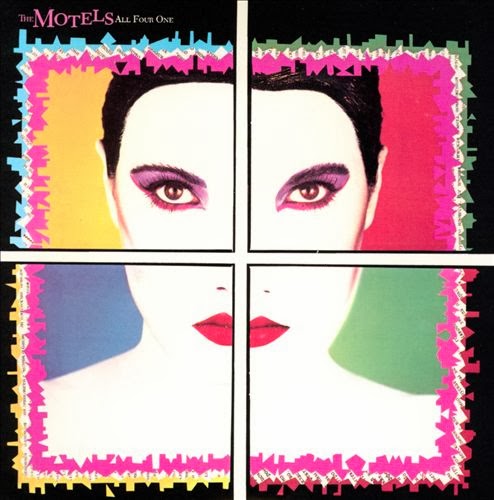
Artist: The Motels
Album: All Four One
Time for a little more 'oooh' and a little less 'uh-huh'. The Motels released two fantastic rock albums in the new wave period. However, by 1982 they had changed tact. All Four One represents their shift into the new romantic movement, alongside the likes of Joe Jackson and Spandau Ballet.
Howver, the change in sound does not take anything away from Martha Davis's songwriting skills; it just means that they are presented in a much more polished format.
I first discovered The Motels last July when they were compared to one of my favourite bands. Discovering the moody perfection that is Only the Lonely on YouTube compelled me to buy this album.
Like most 20 year old students, I am terrified of what the future has in store. All Four One arrived on one of those all common days of isolation and fear. As usual, it went straight onto my MP4 and I went straight out the door for a summer evening walk.
Mission of Mercy is a seriously heavy rocker that invoked such a sense of urgency I realised I had walked nearly half a mile by the time it ended. Tracks like Art Fails, Change My Mind and Forever Mine are great feel-good numbers; but in my despondent state, when a song like Only the Lonely creeps in with its foreboding opening synthesiser chords, it makes isolation even more poignant, particularly when you are stood on a hill watching a glorious sunset and all you can hear is Martha Davis's bluesy voice declaring "I feel so lonely way up here."
None the less, although it might be quite a moving and introspective album, All Four One is by no means sad, at all. It is the kind of album that all teenagers who feel marginalised- in other words, all teenagers- should own. The pounding beat of So L.A, a song about the superficial side of Los Angeles, will have you walking to the thumping rhythm of the chorus as Davis chants "And the man on the corner got something new and something new is good for you tonight." This album is half moody, half manic and what better time to feel that way than when you can burn it off, knowing you have to be in bed a few hours later?
Stand out tracks: Mission of Mercy, Only the Lonely, So L.A.
Artist: Curved Air
Album: Midnight Wire
There is no definable reason why this album is for night time, it just is. Granted, the title suggests that is best suited for post-watershed listening, and two tracks are absolutely essential night listening, but it is very difficult to put into words why this album made the list.
Curved Air made their name as the most successful prog rock band fronted by a woman, the exotic Sonja Kristina. After releasing four excellent progressive albums in their own unique flavour, incorporating rock, folk and medieval fanfare styles, 1975 saw the release of the much more mainstream rock flavoured Midnight Wire.
Police drummer and Kristina's ex-hisband, Stewart Copeland, played drums on this seven track curio. Opening with the fantastic hnoky-tonk-styled rocker, Woman on a One Night Stand, a track that sounds like it was penned for Shirley Bassey, Curved Air are almost unrecognisable apart from Sonja Kristina's almost operatic voice, leading a song about a woman who is only out for one thing.
Moving onto the more sultry and sexy Day Breaks My Heart, the band is more recognisable as the musicianship really takes hold in true Curved Air fashion.
Possibly the albums' best track The Fool, an exquisitely jumpy shuffle that sees Kristina sing the chorus accompanied by a tumbling violin part. This track is the first song that is completely recognisable as a Curved Air song. Followed by the mellow instrumental Pipe of Dreams, one is lulled into a calmness that is not again heard on this album.
The ending song, the title track, is a soaring seven minute epic is a roller-coaster that brings you to the brink of tears as Kristina asks you "What do you know of drowning off the midnight wire?" and singing of "ritual dying on the stage", a description of her stage performances around that time. The diversity of this song becomes obvious when the melancholy verse, accompanied only by a piano fades away and the soaring chorus kicks in with Copeland crashing in with the rest of the band as Kristina asks: "Who's that calling from the midnight wire?" That is a song to play as you climb the stairs to brush your teeth to remove the taste of pork scratching from your mouth.
Stand out tracks: Woman on a One Night Stand, The Fool, Midnight Wire
Artist: Jackson Browne
Album: Late for the Sky
I don't see how anyone who claims to be well versed in terms of music could possibly omit this absolute masterpiece of both musicianship and songwriting. I have been walking into the hairdressers with a photograph of this man's excellent hair for as long as I can remember. But it's not just his style that I admire.
In the words of Bruce Springsteen: "What drew women to Jackson, besides the obvious, was that they finally felt that they were listening to a guy who knew as much about love as they did. And what drew men to Jackson was that when they listened to him they realised that they knew more about love than they thought they did. In seventies post-Vietnam America there was no album that captured the fall from Eden better than Jackson's masterpiece, Late for the Sky."
Amen, Mr Springsteen. Browne's third album is much darker than that of his earlier eponymous album and For Everyman. From the moment the weeping guitar and piano chords of Late for the Sky lilt out of your speakers, you know that you had better be in the mood for some serious soul-searching. This is not the album you want to listen to if you are on top of the world. No matter how good a mood you are in, it simply cannot last as you hear Jackson declare "Awake again, I can't pretend. And I know I'm alone and close to the end of the feeling we've known."
The second track, Fountain of Sorrow, one of Browne's most famous songs sounds like you have to brace yourself for a seven minute whirlpool of despair, but this is not the case. An easy-listening soft-rocker, it is led by piano and bass as Jackson delivers some of the finest lyrics of his career.
For me the highlight has always been The Late Show, another mid-tempo easy listener, but this time the lyrics make it very much uneasy listening. Maybe it's Browne's cynicism that clicks with me, but when he ponders the line "Maybe people only ask you how you're doing 'cause that's easier than letting on how little they could care. But when you know that you've got a real friend somewhere, suddenly all the others are so much easier to bear", I don't think an adult alive could not find themselves agreeing with him, even just a little.
However, unlike many of the songwriter's of his time, Browne's writing has always got a glimpse of hope in it. The Late Show takes a hopeful turn towards the end as he sings: "You go and pack your sorrow, the trash man comes tomrrow. Leave it at the curb and we'll just roll away." This is made even more significant as The Late Show closes Side A (that's the top part of a vinyl for all you downloading philistines) with the sound of a car door slamming and a car revving up and driving away- as simple and effective as the man who wrote it.
Late for the Sky might make you consider the answers to some questions about yourself you've been trying to avoid, but by the time the albums prophetic closer, Before the Deluge, ends, you will be strangely uplifted and glad you stuck out some of the most important songwriting of the 20th century.
Stand out tracks: Late for the Sky, Fountain of Sorrow, The Late Show, For A Dancer
Artist: Stevie Nicks
Album: The Soundstage Sessions
There are very few Stevie Nicks albums I would advise anyone to listen to during the day. Music released from a woman famed for her black chiffon shawls, songs about witches and sorcerers and who, by her own admission, does not go to bed until 4am, is quite predictably not going to be overly drenched in sunshine... moonlight however, that's another story.
The Soundstage Sessions is in fact a live album. It features what Nicks considers to be more obscure tracks, with a few hits thrown in, from a live DVD released in 2008, Live in Chicago. However, the applause has been edited out and is basically a studio album made up of re-records and some interesting cover choices.
Beginning with a stomping version of her 1983 hit Stand Back, the nasal quality in Nicks' voice makes her sound quite flat. Thankfully, her fabulous band covers this. A cover of the Dave Matthews Band's Crash into Me, however, redeems her as she reworks some of the lyrics to make it work for a woman to sing.
An excellent new version of one of Nicks' greatest ever songs, Sara, follows this. Extended and accompanied by her backing singers, Stevie still has the power to move people whether what she is singing is new or not.
The live album element gives this album a sense of night time by default, but the later songs are just impossible to fully appreciate unless you have some serious mood lighting set up and there is no sun in sight. Most notable is the rather obvious How Still My Love. As Nicks sings "In the still of the night it's me that's talking to you", it's clear that this song was not made for daytime airing. Again, an extended version, it is perhaps even finer than the original version that features on her first solo album, 1981's bewitching Bella Donna.
Followed up by a gorgeous cover of Bonnie Raitt's Circle Dance, transformed into a duet with Vanessa Carlton, follows the moody How Still.
Two tracks from Stevie's 2001 album Trouble in Shangri-La provide the penultimate songs. Both versions of Sorcerer and Fall From Grace are, without question, far rockier and more memorable than the original studio recordings. Much like The Motels and The Eagles- if you are angry in the night, these are two songs you should stick on.
Stand out tracks: Crash into Me, How Still My Love, Fall From Grace, Sorcerer
Artist: Jackson Browne
Album: Lawyers in Love
"Again?" I hear you cry. Yes, again; but not just for my own indulgement, Lawyers in Love and Late for the Sky are two different animals. Yes, the songwriting is still top-notch, yes it still makes you think, but this time around, nine years later, Mr Browne has grown up.
His love songs are now not so despairing and more level-headed. His politics are less cynical and more in your face.
The album's opener and title track is as satirical as its album cover. A rock song typical of its time, Browne sings of the "strangled cries of lawyers in love."
The next two songs, On the Day and Cut It Away are very 1980's and could have been taken from All Four One. The first song is advice to a friend that if he carries on living in this way he will be in deep trouble when he falls in love. The latter is about Browne's own frustrations in love about why he "hungers for something more". In typical Jackson form, he sends everyone a message we will all need to hear at some point and you will find yourself taking a deep breath as he cries in anguish "I know I've gotta let you go. I know you should have left a long time ago."
The only problem with this album is that the rock numbers all sound so similarly. The title track is an excellent rocker, but when Downtown and For a Rocker kick in with the exact same opening beat and riff the sheen is taken off the album somewhat.
Be that as it may, I have not yet mentioned the two best tracks on the album, which make it both essential as a night time album and a as a must-buy. The track of the album is Tender is the Night. One of the finest songs Browne has ever recorded, this is the only song to listen to when your love life has hit the skids and your claustrophobia has forced you out onto the city streets. So as the traffic passes by and the inevitable hand-holding couple walk past you, what better company is there than that of Jackson Browne saying that between the life he expected and the way it's always been, he can't walk back in again... truer words were never sung.
The second is the much harsher and colder Knock on Any Door, an almost mocking 'I told you so' ballad that hears The Pretender say to a former lover "Save your tears for some occasion. Leave the heartache to yourself."
So, whereas Late for the Sky is perfect for late night contemplation with a glass of wine, Lawyers in Love is a much more active album. So get some walking boots on, switch on this album and take a long stroll, maybe calling in at a local tavern for just one drink... then two hours later, as a montage of all the signs above the bars you visit that night float past you in a haze, let Tender is the Night guide you back to your tastefully decorated bachelor/bachelorette abode.
Stand out tracks: Lawyers in Love, Cut It Away, Tender is the Night, Knock on Any Door
Artist: Marianne Faithfull
Album: Blazing Away
Another live album is a good one to end on, I think. There is next to nothing that is daytime about Marianne Faithfull: after a relationship with Mick Jagger and being present at Keith Richards's infamous Redlands bust for drugs, she ended up living on a wall, addicted to heroin. Needless to say, her image as the virginal song thrush of the 60's was shattered.
In 1979, still carrying heroin problems she recorded a true classic, the dark and chilling Broken English. Her cracked and nicotine-stained vocals were completely unrecognisable, but far more preferable to the bland Sandy Shaw-esque songs Faithfull was singing in the 60's. Songs like Come and Stay With Me and This Little Bird simply were not Marianne Faithfull. Politically charged cringers like Broken English and foul-mouthed cult poems-turned-songs like Why D'ya Do It were.
Blazing Away showcases songs from Faithfull's entire career, with a few new ones thrown in nicely. Recorded in a chapel, the opening track, Les Prisons Du Roy, features a choir and Faithfull singing completely in French. A live version of one of her masterpieces, Strange Weather, follows.
Live highlights include Working Class Hero, extended with an excellent bass solo, Faithfull's vocals are far more bitter than that of the version on Broken English. The same can be said for Sister Morphine, which she co-wrote with Jagger and is also featured on The Stones's brilliant Sticky Fingers album from 1971.
One of Faithfull's finest tracks, Times Square, is another song that is better on this album than the original. Some real magic must have been in the air the night of this concert, making it even more important you listen to it at this time. The closer, and extended version of her masterpiece, Broken English hears her army of musicians attacking the pulsating and raucous intricacies of the song, while Faithfull absolutely spits the vocals, particularly the refrain "What are we fighting for?" A re-worked version of her first hit As Tears Go By is a vast improvement to the original, willowy version she recorded in the 1960's.
Studio-wise, the title track provides Faithfull with one of the most contemplative songs of her career, about a soul-searching down and out looking for a place to stay. The frustration in her voice as she asks "What is the reason that things change? What is the reason they can never stay the same?" will, like Jackson Browne, take you back to the point in your life where you felt like this- we've all been there.
Blazing Away is a good closer for this article because it is, in many ways, a culmination of all the aforementioned albums. It has the reflective songwriting of Jackson Browne, the sombre moodiness of The Motels, the soaring quality of Curved Air and The Eagles, whilst also genuine beauty of a Richard Hawley album... Granted, Faithfull's songs that are about sex are much more vicious than that of Goldfrapp's.
Stand out tracks: Strange Weather, Working Class Hero, Times Square, Blazing Away, Broken English

 The three piece that was my last band,
was